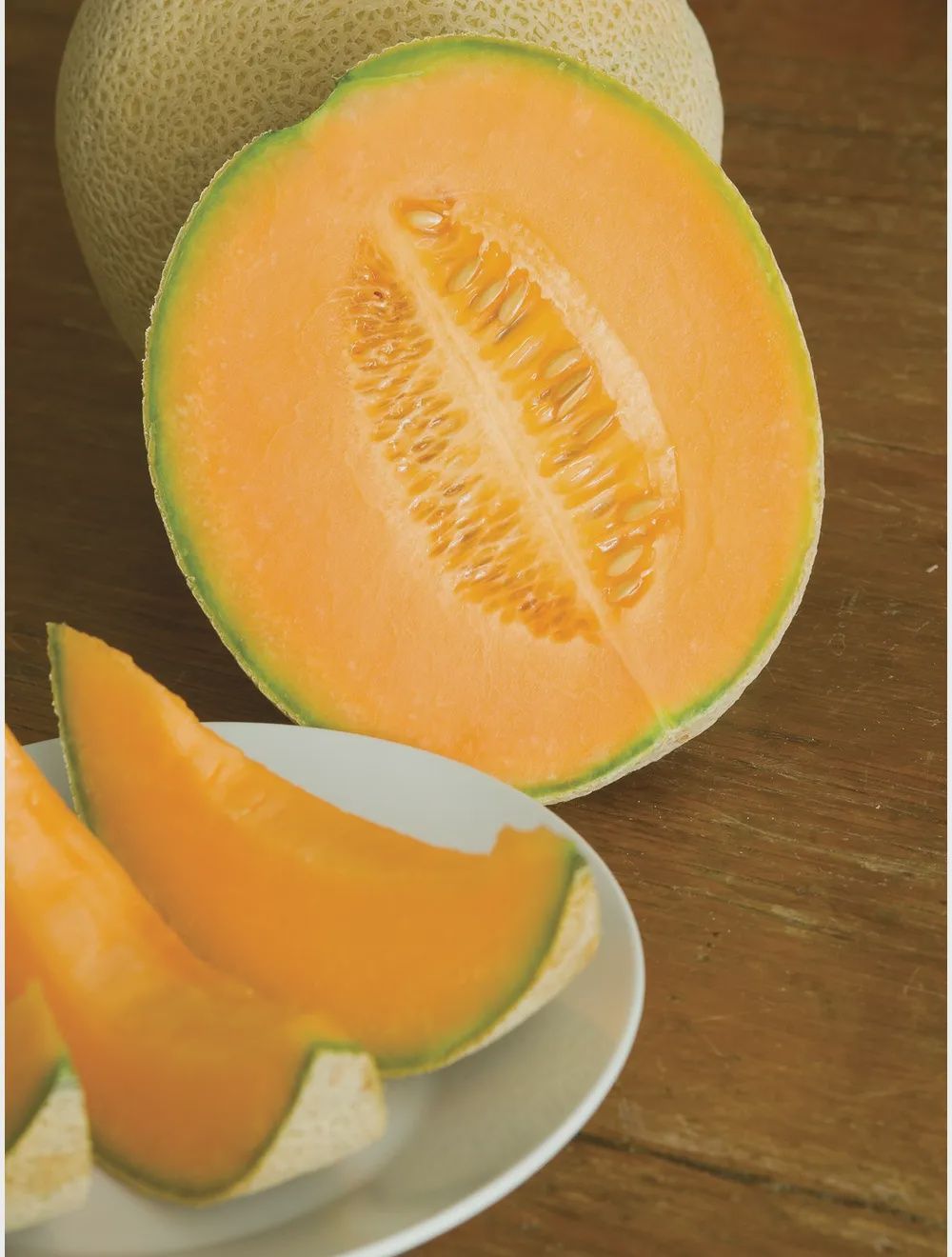
Hales Best Cantalope
Share
$28.00
Size
Please choose
In stock
1
Delivery information
Local delivery: today
Product details
Brand: Seed
HEIRLOOM. This muskmelon became widely popular because it combined excellent flavor with earliness.
1920s overnight muskmelon sensation, owing its popularity to excellent flavor with earliness. Beautifully ribbed oval melon with deep-green skin and golden netting. Firm, salmon-toned flesh is aromatic and sweet. A refreshing breakfast treat and a savory hors d’oeuvre when partnered with prosciutto. Thrives in hot weather. Plant at the base of a trellis so vines can climb.
How to Sow and Plant
Sowing Seed Indoors:
- Direct sowing is recommended, but to get a head start you can start honeydew indoors 3-4 weeks before the last frost in individual biodegradable pots indoors. Sow 2-3 seeds per pot.
- Sow seeds ½ inches deep in seed-starting formula
- Keep the soil moist at 70 degrees F
- Seedlings emerge in 7-14 days
- As soon as seedlings emerge, provide plenty of light on a sunny windowsill or grow seedlings 3-4 inches beneath fluorescent plant lights turned on 16 hours per day, off for 8 hours at night. Raise the lights as the plants grow taller. Incandescent bulbs will not work for this process because they will get too hot. Most plants require a dark period to grow, do not leave lights on for 24 hours.
- Seedlings do not need much fertilizer, feed when they are 3-4 weeks old using a starter solution (half strength of a complete indoor houseplant food) according to manufacturer’s directions.
- Thin to one plant per pot.
- Before planting in the garden, seedling plants need to be “hardened offâ€. Accustom young plants to outdoor conditions by moving them to a sheltered place outside for a week. Be sure to protect them from wind and hot sun at first. If frost threatens at night, cover or bring containers indoors, then take them out again in the morning. This hardening off process toughens the plant’s cell structure and reduces transplant shock and scalding.
Sowing Directly in the Garden
- Prepare the bed by turning the soil under to a depth of 8 inches. Level with a rake to remove clumps of grass and stones.
- Sow in fertile, warm soil after danger of frost has passed.
- Sow seeds 3 inches apart in groups of 4-6. Cover with ½ inch of fine soil.
- Space groups 4-6 feet apart each way.
- Keep evenly moist.
- Seedlings emerge in 7-14 days.
- Thin to 3 or 4 strongest seedlings in each group when they are 1-2 inches high.
How to Grow
- Keep weeds under control during the growing season. Weeds compete with plants for water, space and nutrients, so control them by either cultivating often or use a mulch to prevent their seeds from germinating.Â
- Melons have a shallow root system, mulches help retain soil moisture and maintain even soil temperatures.
- Keep plants well-watered during the growing season, especially during dry spells. Plants need about 1-2 inches of rain per week during the growing season. Use a rain gauge to check to see if you need to add water. It's best to water with a drip or trickle system that delivers water at low pressure at the soil level. If you water with overhead sprinklers, water early in the day so the foliage has time to dry off before evening, to minimize disease problems. Keep the soil moist but not saturated.
- As plants grow mulch to control weeds, keep fruits off the ground and conserve moisture
- Do not move the vines, they are easily injured.
- Monitor for pests and diseases. Check with your local Cooperative Extension Service for pest controls recommended for your area.
Tips
- Allow your melons to ripen on the vine. In general fruits are ripe when they smell aromatic and when stems start to crack and the fruit slips off easily with light pressure from your thumb.
- Generally, fruits are ripe when they smell fruity.
- Harvest cantaloupes when the fruits change from green to yellow or tan and they break away easily from the vine.
- Harvest winter melons when they turn the appropriate color and their blossom ends are soft.
- Honeydew melons are ripe when the skin turns to a creamy yellow color and the blossom end is slightly soft. To avoid damage cut the honeydew off the vine with sharp shears.
- Watermelons are ready to harvest when their undersides turn from white to a creamy yellow. The tendrils closest to the fruit will also turn brown and dry up and the skin will become dull and hard at harvest time.
- For best flavor eat at room temperature.
- Melons may be stored in the refrigerator for a short time. They will lose their flavor and color if stored too long.
Hales Best Cantalope
Share
Powered by Lightspeed
Display prices in:USD